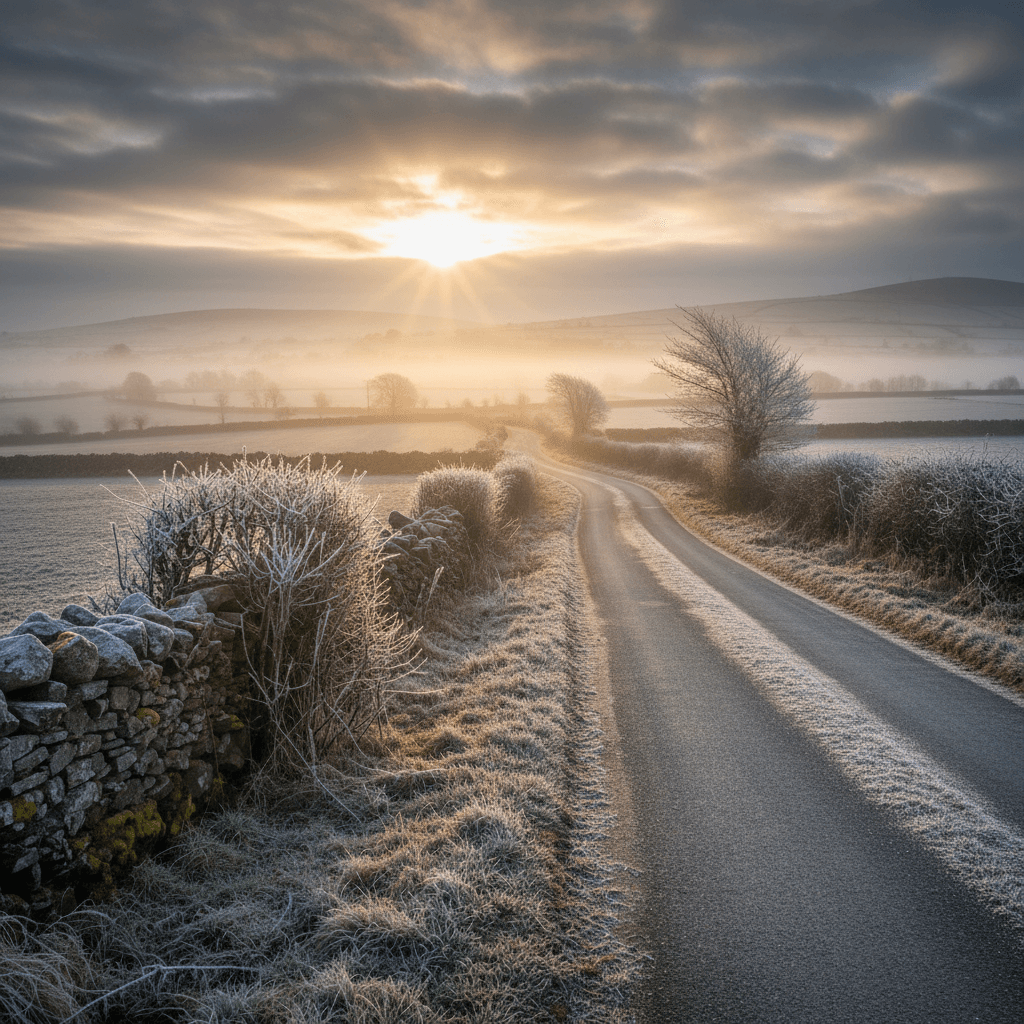
Winter driving in Ireland presents unique challenges: rain, fog, occasional ice and snow, and dramatically shorter days. But with preparation and adjusted techniques, you can safely enjoy Ireland's stunning winter landscapes.
Winter Conditions in Ireland
What to Expect
| Condition | Likelihood | Where Most Common |
|---|---|---|
| Heavy rain | Very common | Everywhere, especially west |
| Strong winds | Common | Coasts and exposed areas |
| Fog | Common | Inland, valleys, mornings |
| Ice | Occasional | Elevated roads, rural areas |
| Snow | Rare (coastal), occasional (inland/mountains) | Mountains, Midlands |
| Frost | Common | Everywhere, especially clear nights |
Daylight Hours
| Month | Sunrise | Sunset | Daylight |
|---|---|---|---|
| December | ~8:30am | ~4:00pm | ~7.5 hours |
| January | ~8:30am | ~4:30pm | ~8 hours |
| February | ~7:45am | ~5:30pm | ~10 hours |
Plan drives for daylight hours when possible. Navigating unfamiliar Irish roads in darkness adds significant challenge.
Vehicle Preparation
Before Your Trip
- Check tyre tread depth (minimum 1.6mm, 3mm+ recommended)
- Verify tyre pressures (check when cold)
- Test all lights work (headlights, brake lights, indicators, fog lights)
- Top up screenwash with winter formula
- Check wipers aren't worn
- Ensure battery is healthy
- Keep fuel tank at least half full
Rental Car Checks
Before leaving the depot:
- Locate headlight controls and fog light switch
- Test wipers and washers
- Check you have de-icer or scraper (ask if not)
- Know where the hazard light button is
Essential Winter Kit
Keep in the Car
- Ice scraper and de-icer
- Torch with spare batteries
- Phone charger (car adapter)
- Warm blanket
- High-visibility vest
- First aid kit
- Snacks and water
- Warm clothing layers
For Mountain/Remote Routes
Add to the above:
- Jump leads
- Warning triangle
- Basic tool kit
- Shovel (if snow expected)
- Snow socks/chains (for mountain passes)
Driving Techniques
In Heavy Rain
Ireland's winter brings frequent heavy rain:
- Speed: Reduce by 10-20%
- Distance: Increase following distance to 4+ seconds
- Visibility: Use dipped headlights (not just sidelights)
- Spray: Prepare for spray from lorries and buses
- Aquaplaning: If steering feels light, ease off accelerator—don't brake
Flood warnings:
- Never drive through flowing water
- If water is still, test depth with a stick first
- Drive slowly through shallow water, keeping revs high
In Fog
Fog is common on Irish winter mornings, especially inland:
Lights:
- Use dipped headlights (NOT full beam—reflects back)
- Use rear fog lights when visibility below 100m
- Turn off fog lights when visibility improves (they dazzle)
Speed: Match visibility—if you can only see 50m, drive at 50km/h max
Distance: Triple your normal following distance
Don't: Follow the car ahead too closely just to see their lights
On Ice
Ice is most likely:
- Early morning on untreated roads
- On bridges and overpasses (freeze first)
- In shaded areas that haven't thawed
- On rural roads that aren't gritted
If you hit ice:
- Stay calm
- Don't brake harshly or accelerate
- Steer gently in the direction you want to go
- Use engine braking (lower gears) if safe
Black ice is invisible. If temperatures are near freezing and roads look wet but aren't reflecting, assume ice.
In Snow
Snow is rare at sea level but possible inland and in mountains:
Before setting out:
- Clear ALL snow from the car (including roof)
- Ensure windows and mirrors are completely clear
Driving:
- Use highest gear possible (less wheel spin)
- Accelerate and brake gently
- Leave massive following distance (10+ seconds)
- Approach hills steadily—don't stop and restart
- Going downhill, use low gear and engine braking
Getting unstuck:
- Rock gently between reverse and first
- Use floor mats for grip if needed
- Don't spin wheels—dig out instead
Short Days Strategy
Plan Around Light
- Start early to maximise daylight
- Schedule major driving for midday
- Reach accommodation before dark when possible
- Keep evening drives short and on main roads
Dawn and Dusk
The most challenging times:
- Low sun creates blinding glare
- Wildlife more active (deer, sheep)
- Frost forming as temperature drops
- Other drivers adjusting to changing light
Use sun visor, drive slower, and be extra vigilant.
Route Considerations
Mountain Roads in Winter
Routes like Wicklow Mountains, Connor Pass, and Donegal Highlands can be treacherous:
- Check conditions before setting out
- Some mountain passes close in snow/ice
- Have alternative routes planned
- Don't attempt if conditions are poor
Coastal Routes in Winter
Wild Atlantic Way and coastal routes face different challenges:
- Strong winds, especially on exposed stretches
- Salt spray affecting visibility
- Storm surges occasionally close roads
- Spectacular but demanding driving
Recommended Winter Routes
Easier routes for winter driving:
- Boyne Valley - Inland, good roads
- Cork Harbour & Kinsale - Mild southern climate
- Dublin Bay & Howth - Urban, well-maintained
Weather Resources
Before You Drive
- Met Éireann (met.ie) - Official Irish weather service
- AA Roadwatch - Real-time road conditions
- RSA.ie - Road Safety Authority updates
- Local radio - Traffic and weather reports
Weather Warnings
Met Éireann defines its colour-coded warnings by how unusual the weather is and what it does. Its published definitions:
- Yellow: "Not unusual weather. Localised danger."
- Orange: "Infrequent. Dangerous / disruptive."
- Red: "Rare. Extremely dangerous / destructive."
Each level also carries action wording — be aware at Yellow, prepare and "delay or cancel as appropriate" at Orange, and at Red take action and follow the instructions of the authorities. Take Red warnings seriously; they are rare and mean genuine danger.
Two things this summary does not cover. The colour is set per weather type, so an Orange wind warning and an Orange rain warning are not the same day for a car. And Northern Ireland is not covered by Met Éireann at all — warnings there are issued by the UK Met Office, where the middle level is called Amber rather than Orange. Full thresholds, the advisory that runs a week ahead, and the Northern Ireland differences are in the Ireland weather warnings guide. Definitions quoted from Met Éireann, checked September 2026.
If Conditions Deteriorate
While Driving
- Slow down gradually
- Increase following distance
- Turn on appropriate lights
- Consider stopping safely
If You Must Stop
- Find a safe location (car park, layby)
- Don't stop on the hard shoulder unless emergency
- Turn on hazard lights
- Stay in vehicle if safer than outside
- Keep engine running for heat (ensure exhaust is clear)
Getting Help
- Save breakdown number before you need it
- 999/112 for emergencies
- Inform someone of your route and ETA
Winter-Specific Tips
Early Mornings
- Allow extra time for de-icing
- Don't drive with misted windows
- Give yourself time to warm up and focus
Rural Roads
- More likely to be untreated
- More likely to have ice in shaded areas
- More likely to encounter livestock
Ferries
If your route includes a ferry:
- Check ferry operating in bad weather
- Book flexibility if possible
- Arrive early (bad weather can cause delays)
The Bottom Line
Winter driving in Ireland is manageable with preparation. The keys:
- Prepare: Vehicle, kit, and yourself
- Plan: Check forecasts, allow extra time
- Patience: Slow down, don't rush
- Prudence: If conditions are bad, delay or change plans
Ireland's winter landscapes are beautiful and uncrowded. With the right approach, you can enjoy them safely.