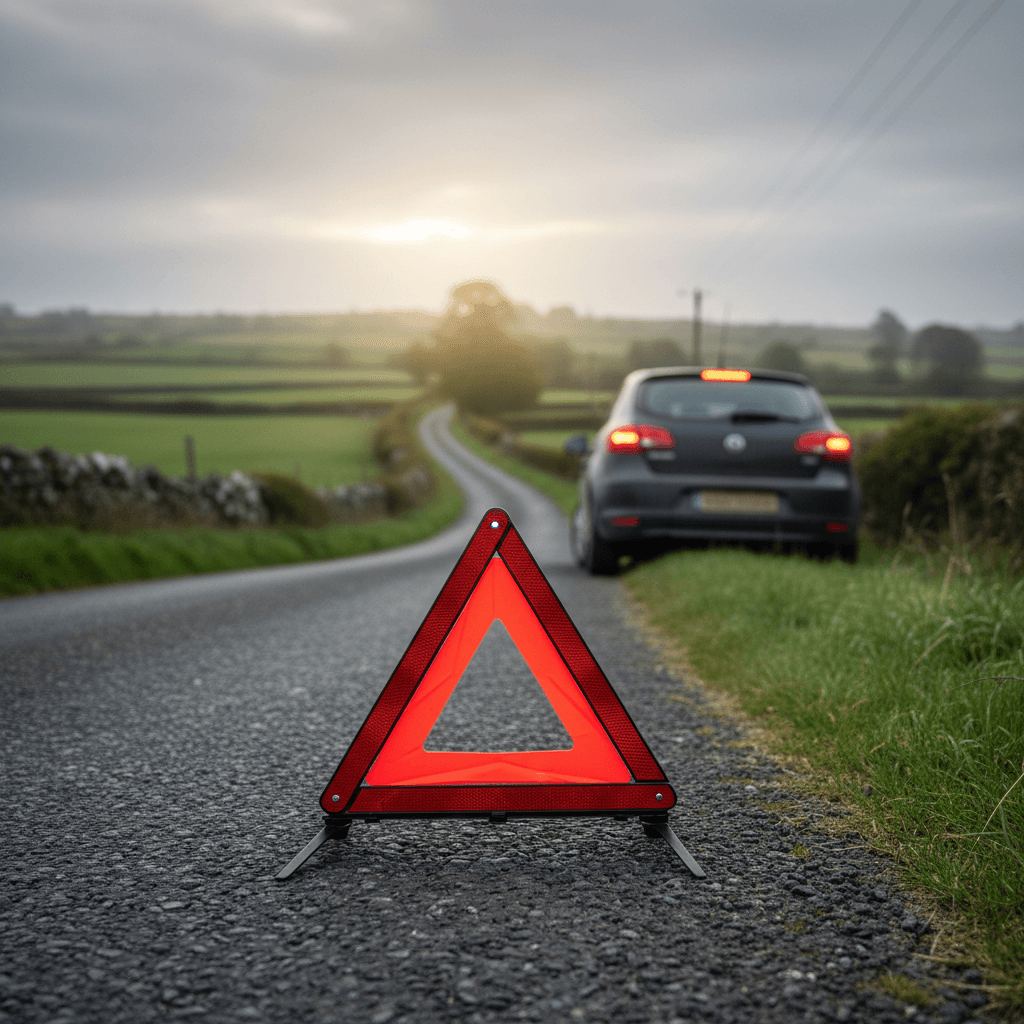
Nobody plans for a breakdown or accident, but knowing what to do can make a stressful situation manageable. This guide covers everything you need to handle roadside emergencies in Ireland.
Emergency Numbers
Save these in your phone before you travel:
| Service | Number | When to Call |
|---|---|---|
| Emergency Services | 999 or 112 | Life-threatening emergencies |
| Gardaí (Police) | 999 | Accidents, crimes, emergencies |
| Ambulance | 999 | Medical emergencies |
| Fire Service | 999 | Fires, rescue needed |
| AA Roadside | 01 617 9999 | Breakdowns (members) |
| RAC Roadside | 0330 159 1111 | Breakdowns (members) |
If You Break Down
On a Motorway
- Pull onto the hard shoulder if possible
- Turn on hazard lights immediately
- Exit the vehicle on the side away from traffic
- Move behind the barrier if one exists
- Walk to the nearest emergency phone (orange boxes every 2km) or call for help
- Wait away from your vehicle—never stand behind it
On Other Roads
- Move the vehicle off the road if safe to do so
- Turn on hazard lights
- Place warning triangle 45 metres behind the car (if you have one)
- Wear high-visibility vest if leaving the vehicle
- Call your breakdown provider or rental company
While Waiting
- Stay with or near your vehicle (unless on a motorway)
- Keep your phone charged
- Don't attempt repairs on busy roads
- Accept help cautiously—genuine helpers are common, but stay aware
If You Have an Accident
Immediate Actions
- Stop immediately—leaving is a criminal offence
- Turn on hazard lights
- Check for injuries—call 999 if anyone is hurt
- Move to safety if vehicles are blocking traffic
- Do not admit fault (even if you think you were)
Information to Exchange
With other drivers involved:
- Name and address
- Vehicle registration numbers
- Insurance company and policy number
- Contact phone numbers
Document Everything
- Photograph the scene from multiple angles
- Capture vehicle damage on all cars
- Note road conditions, weather, lighting
- Get witness contact details if possible
- Write down what happened while memory is fresh
Report the Accident
- To Gardaí: Required if anyone injured, or if other driver doesn't stop, or damage over €1,000
- To rental company: Always, regardless of severity
- To your insurance: Within 24 hours ideally
Common Breakdown Issues
Flat Tyre
If you're comfortable changing a tyre:
- Find a safe, flat location away from traffic
- Apply handbrake, engage gear (or Park)
- Use wheel brace to loosen nuts (don't remove)
- Position jack on solid ground, raise vehicle
- Remove nuts, swap wheels
- Hand-tighten nuts, lower vehicle, fully tighten
- Check spare tyre pressure at next garage
Many rental cars have no spare—call breakdown service instead.
Dead Battery
If you have jump leads and a willing helper:
- Position vehicles close but not touching
- Connect red lead to dead battery (+), then good battery (+)
- Connect black lead to good battery (-), then unpainted metal on dead car
- Start the working car, wait 5 minutes
- Try to start the dead car
- Remove leads in reverse order
- Drive for 30+ minutes to charge battery
Unsure? Call for assistance.
Overheating
- Pull over safely as soon as warning light appears
- Turn off AC, turn on heater to draw heat from engine
- Do not open the radiator cap while hot
- Wait 30+ minutes for engine to cool
- Check coolant level (top up with water if necessary)
- Call for help if problem persists
Misfuelling
Do not start the engine. Starting circulates wrong fuel and causes major damage.
- Put car in neutral
- Push away from pumps
- Call rental company immediately
- Arrange fuel drain service (widely available)
See our Fuel Guide for prevention tips.
Breakdown Coverage
Rental Car Breakdown
Your rental should include breakdown cover. Before you drive:
- Save the breakdown number in your phone
- Keep rental documents accessible
- Know what's covered (usually recovery to nearest garage)
Driving Your Own Car
If bringing a car from the UK or Europe:
- AA or RAC European cover extends to Ireland
- Green Card may be required for insurance
- Check your policy covers Republic of Ireland specifically
Typical Wait Times
- Motorways/main roads: 30-60 minutes
- Rural areas: 1-2 hours
- Very remote areas: 2-4 hours
Remote routes like Connemara or Donegal Highlands can have longer waits.
Preparing Before You Go
In the Car
Essential items to carry:
- Phone charger (car adapter)
- Emergency contact numbers written down
- Torch/flashlight
- High-visibility vest (legally required in some EU countries)
- First aid kit (basic)
- Water and snacks
- Warm layer/blanket
- Rain jacket
On Your Phone
- Download offline maps
- Save emergency numbers
- Keep phone charged (portable battery pack)
- Know your rental agreement number
Before You Set Off in Bad Weather
Most of the stops on this page are avoidable by not starting the drive. Check the warnings first: the Ireland weather warnings guide covers what each colour obliges you to do, and how far ahead a warning actually exists.
Rural Road Considerations
Ireland's most scenic routes are often remote. Special considerations:
Limited Mobile Signal
Parts of the West have poor coverage:
- Download offline maps before going
- Note the last place you had signal
- Tell someone your planned route
- Emergency 112 may work when regular calls don't
Narrow Roads
On single-track roads:
- Use passing places—don't block them
- If you break down on a narrow road, try to clear the way
- Put on hazards and use warning triangle
Livestock
If you hit an animal:
- Stop and assess the situation
- Report to Gardaí (it's legally required)
- Don't attempt to move injured large animals
- Contact a local vet if needed
Medical Emergencies
Getting Help
- 999/112 for emergencies
- Direct to nearest hospital if faster
- Pharmacies can help with minor issues
Hospitals
Main hospitals are in cities and large towns. In rural areas, expect to travel to the nearest town.
European Health Insurance Card (EHIC)
UK/EU visitors should carry EHIC or GHIC (UK Global Health Insurance Card) for access to public healthcare.
Travel Insurance
Always have travel insurance that covers:
- Medical expenses and repatriation
- Trip interruption
- Emergency transport
After an Emergency
Rental Company
Contact them regardless of what happened:
- Report any incidents
- Follow their damage procedures
- Get written confirmation of reports
Insurance Claims
Gather documentation:
- Rental agreement
- Incident report
- Photos
- Police report (if applicable)
- Witness details
- Medical records (if injuries)
- Receipts for any expenses
Take Care of Yourself
Accidents and breakdowns are stressful:
- Take time to decompress
- Adjust plans if needed
- Don't drive if shaken up
Quick Reference Card
Save this to your phone:
IRELAND EMERGENCY NUMBERS
------------------------
Emergency: 999 or 112
AA Roadside: 01 617 9999
RAC: 0330 159 1111
Rental company: [add number]

IF ACCIDENT:
1. Stop & hazards on
2. Check for injuries (999 if yes)
3. Exchange details
4. Photograph everything
5. Report to rental company

IF BREAKDOWN:
1. Safe location, hazards on
2. Exit away from traffic
3. High-vis vest
4. Call breakdown service
5. Wait safely