Strokestown & Rathcroghan
Roscommon
Strokestown & Rathcroghan at a glance
- Distance
- 82 km
- Driving time
- 1.5 hoursAllow 1 day
- Best direction
- Roscommon Town → Castlerea
- Best season
- Spring, Summer, Autumn and Winter
- Nearest airport
- Ireland West (Knock)~49 km away
- Fuel estimate
- ~€95.3 L at €1.75/L
Fuel estimate assumes 6.5 L/100km and an average Republic of Ireland petrol pump price of €1.75 per litre (AA Ireland, July 2026) — see the Ireland fuel price guide for current rates.
About This Route
Roscommon holds two of Ireland's most significant heritage sites - Strokestown's Famine Museum, where the tragedy becomes achingly personal, and Rathcroghan, the ancient capital of Connacht. This route connects them through the quiet heart of rural Ireland.
Why This Route?
Strokestown and Rathcroghan reveal Irish history:
- Strokestown Park - Famine Museum of international importance
- Rathcroghan - Celtic royal site, Connacht's ancient capital
- Roscommon Town - Norman castle and abbey
- Quiet countryside - Heart of rural Ireland
- Year-round interest - Indoor attractions for any weather
Where to Stay
This compact 75-kilometre loop through central Roscommon links Strokestown's Famine Museum and Rathcroghan's ancient royal site with the county town and Castlerea. The distances are short and the route circular, so a single base anywhere along it will serve. Athlone, on the Shannon just south of Roscommon, offers the best range of accommodation.
Athlone
Athlone is roughly 40 minutes from Strokestown and Roscommon Town, giving easy access to both headline sites. Stay on the Shannon waterfront and you can reach the Famine Museum for its opening, spend the afternoon at the Rathcroghan mounds and Oweynagat cave near Tulsk, and be back for dinner beside the river. Athlone's restaurants, castle, and lively bar scene make it a comfortable Midlands base with more choice than the smaller Roscommon towns.
The Route
Strokestown
The town built by one family:
Strokestown Park House
Palladian mansion with:
- Original furnishings
- Landlord's archive (key to Famine story)
- Walled garden restored
- Ornamental lake
National Famine Museum
Ireland's most important Famine exhibition:
- Documents from the estate archive
- Personal letters and records
- Eviction notices
- Emigrant stories
- Deeply moving experience
The Town
Ireland's widest main street:
- Planned estate town
- Georgian character
- Traditional shops
Tulsk
Home of Rathcroghan:
Rathcroghan Visitor Centre
Introduction to the sacred landscape:
- Exhibition on Celtic history
- Guided tours available
- Maps for self-guided exploration
- Connection to Irish mythology
Rathcroghan Complex
150+ archaeological sites including:
- Rathcroghan mound (royal inauguration site)
- Oweynagat cave (entrance to underworld)
- Ring forts and burial mounds
- Connacht's ancient capital
Cruachan Aí (Rathcroghan)
The complex was:
- Capital of Connacht in myth and reality
- Where Queen Maeve ruled (Táin Bó Cúailnge)
- Inauguration site of Connacht kings
- Active ceremonial centre for 2,500+ years
Roscommon Town
The county capital:
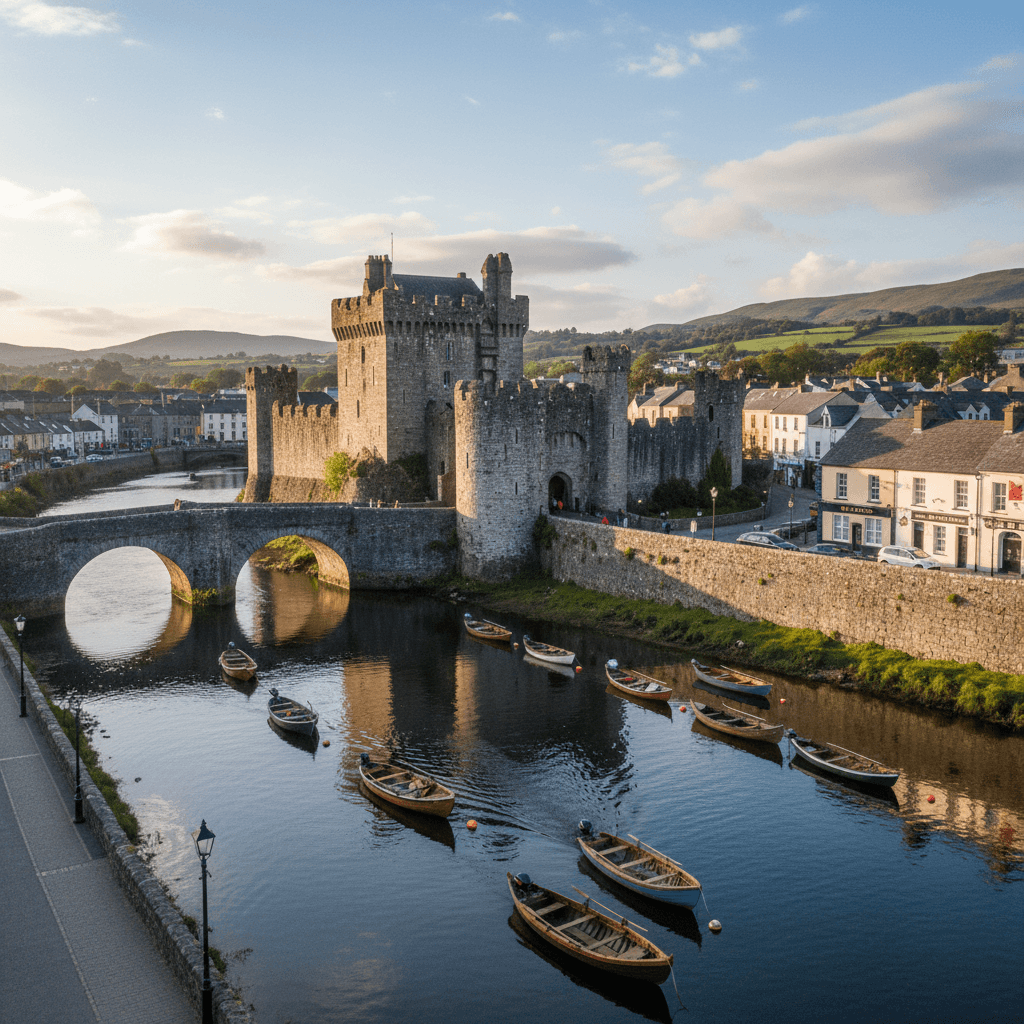
Roscommon Castle
Norman fortress (1269):
- Impressive ruins
- Twin-towered gatehouse
- Free access
Dominican Friary
13th-century ruins with:
- Carved tomb of Felim O'Conor (died 1265)
- Atmospheric setting
Castlerea
Western market town with:
- Clonalis House (O'Conor Don seat)
- Suck River
- Traditional character
Clonalis House
Home of the O'Conor Don:
- Descended from Ireland's last High Kings
- Archives and heirlooms
- Tours by arrangement
Return via Elphin
Through Oliver Goldsmith's birthplace.
National Famine Museum
Why It Matters
The Strokestown archive survived intact:
- Rent rolls and accounts
- Eviction orders signed
- Correspondence with agents
- Lists of tenants shipped to Canada
The Tragedy
In 1847, landlord Denis Mahon evicted 3,000 people and chartered ships to Quebec. He was assassinated within months.
The Experience
Allow 2+ hours. Prepare for an emotional visit.
International Famine Memorial
The grounds connect Strokestown to global famine issues.
Rathcroghan
Historical Importance
This was Connacht's Tara:
- Royal inaugurations
- Assemblies
- Religious ceremonies
- Mentioned in early Irish texts
Oweynagat Cave
"Cave of the Cats":
- Entrance to the underworld in mythology
- Samhain (Halloween) connections
- Accessible with guide (muddy, narrow)
- Birthplace of Medb's warriors
Visiting the Sites
Many sites are in farmland:
- Ask permission
- Follow Visitor Centre guidance
- Some roadside, some require walks
Practical Tips
- Famine Museum - Allow 2+ hours; emotionally demanding
- Rathcroghan tours - Book guided visits in advance
- Oweynagat - Muddy and tight; not for claustrophobics
- Strokestown - Combined tickets for house and museum
- Clonalis - Check opening arrangements
Before You Drive This Route
At 82km the Strokestown & Rathcroghan looks like a 1.5 hours drive on paper. Allow 1 day and you will actually see it. The Irish driving rules and road signs guide covers speed limits, signage and the penalty points system, which is worth ten minutes before you set off. For what a trip like this costs in 2026, from fuel to beds, see the budget guide. Most visitors hire at the airport; our guide to renting a car in Ireland covers deposits, excess and what to check before you drive off the lot. More drives in the same corner of the country are on the County Roscommon page, and the Athlone & Shannon Heritage pairs naturally with this one.
Frequently asked questions
Tap a question to expand the answer.
QHow long does the Strokestown & Rathcroghan take to drive?▼
QCan you drive the Strokestown & Rathcroghan in one day?▼
QWhich direction is best to drive the Strokestown & Rathcroghan?▼
QIs the Strokestown & Rathcroghan suitable for nervous drivers or large vehicles?▼
Need a Car? Try GoCar
Flexible car sharing across Ireland. Get €25 off your first trip.
Register with GoCarCompare car rental options →Hiring instead? You're liable for the first €1,500–€3,000 of damage. Read up on car hire excess insurance before you book.
Fuel stops on this route
Towns on the route with filling stations. Rural stations often close early, so top up before a long empty stretch.
- Castlerea
More routes you'll love
Hand-picked drives with a similar vibe.