St Patrick's Trail
Down • Armagh
St Patrick's Trail at a glance
- Distance
- 191 km
- Driving time
- 3.5 hoursAllow 2 days
- Best direction
- Navan Fort → Saul Church
- Best season
- Spring, Summer and Autumn
- Nearest airport
- Belfast City~31 km away
- Fuel estimate
- ~€2212.4 L at €1.75/L
Fuel estimate assumes 6.5 L/100km and an average Republic of Ireland petrol pump price of €1.75 per litre (AA Ireland, July 2026) — see the Ireland fuel price guide for current rates.
About This Route
Follow in the footsteps of Ireland's patron saint through the landscape where he was enslaved, converted, and ultimately buried. This route connects the key sites of St Patrick's life, from Slemish Mountain to his grave at Downpatrick Cathedral.
Why This Route?
St Patrick's story is woven into the landscape:
- Historical authenticity - Genuine sites from Patrick's life
- Beautiful countryside - Counties Down and Armagh
- Spiritual atmosphere - Pilgrimage destinations still active
- Year-round relevance - Not just for March 17th
- Cultural depth - Early Christian Ireland's story
Where to Stay
At 148 kilometres across Counties Down and Armagh, this two-day pilgrimage trail covers serious ground -- from Navan Fort and Armagh's twin cathedrals in the west to Slemish Mountain and Downpatrick in the east. Splitting the journey with a base at each end keeps driving manageable and lets you give proper time to the major sites on each day.
Newcastle
Newcastle sits on the Down coast between the Mourne Mountains and the sea, roughly 30 minutes south of Downpatrick. It is the handiest base for the eastern half of the trail: the Saint Patrick Centre, Down Cathedral, Struell Wells, and Saul Church are all a short drive north, while the pilgrimage climb of Slemish is an hour further up the coast. The town has a strong range of hotels and guesthouses, plus seafood restaurants along the promenade.
The St Patrick Story
Patrick was born in Roman Britain around 387 AD. At 16, he was captured by Irish raiders and enslaved in Ireland for six years, herding sheep on Slemish Mountain. After escaping, he later returned as a missionary bishop, converting Ireland to Christianity. He died around 461 AD and is traditionally buried at Downpatrick.
The Route
Day 1: Armagh
Navan Fort (Emain Macha)
Begin at the ancient capital of Ulster, where Patrick established his church nearby. This 2,000-year-old ceremonial site was the seat of Ulster kings. The visitor centre brings the myths to life.
Armagh City
The ecclesiastical capital of Ireland, where Patrick founded his main church in 445 AD. Today, two cathedrals (both named St Patrick's) face each other across the city:
- Church of Ireland Cathedral - On the hill where Patrick built his church. His gravestone is actually a medieval mistake, but the site is authentic.
- Catholic Cathedral - 19th-century Gothic Revival, dominating the skyline
Armagh County Museum & Public Library
Ireland's oldest public library (founded 1771) contains a first edition of Gulliver's Travels. The museum covers Armagh's history from Stone Age to present.
Day 2: Down
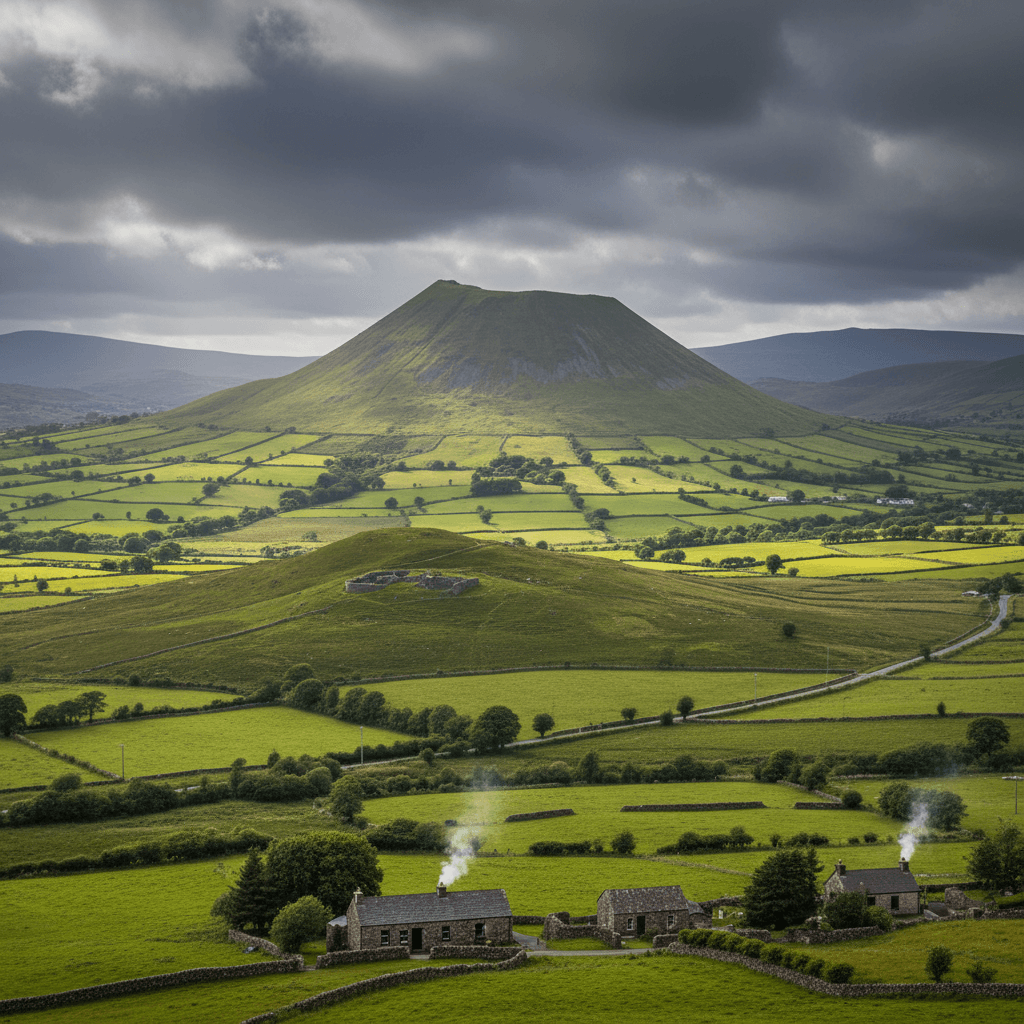
Slemish Mountain
The iconic basalt plug where the young Patrick herded sheep as a slave. The walk to the summit (438m) is moderate and offers panoramic views. On St Patrick's Day, thousands make the pilgrimage climb.
Downpatrick
The traditional burial place of St Patrick:
- Down Cathedral - A large granite stone marks the supposed grave (the authenticity is debated but the tradition is ancient)
- Saint Patrick Centre - Excellent visitor centre telling the saint's story
- Inch Abbey - Ruined Cistercian monastery nearby
Struell Wells
A remarkable complex of holy wells where pilgrims bathed in cold water seeking healing. The stone bath-houses date from the 17th century, but the tradition is much older.
Saul Church
Where Patrick allegedly made his first Irish convert after returning as a missionary. A 1930s church stands on the ancient site.
Pilgrimage Practicalities
St Patrick's Day (March 17)
- Slemish - Major pilgrimage hike (leave very early)
- Downpatrick - Parade and celebrations
- Armagh - Cathedral services
Ordinary Days
Sites are much quieter and more contemplative outside March.
Practical Tips
- Slemish is exposed - Bring waterproofs and proper footwear
- Both Armagh cathedrals welcome visitors - Check service times
- Saint Patrick Centre is excellent - Worth a couple of hours
- Struell Wells is isolated - Best visited with company
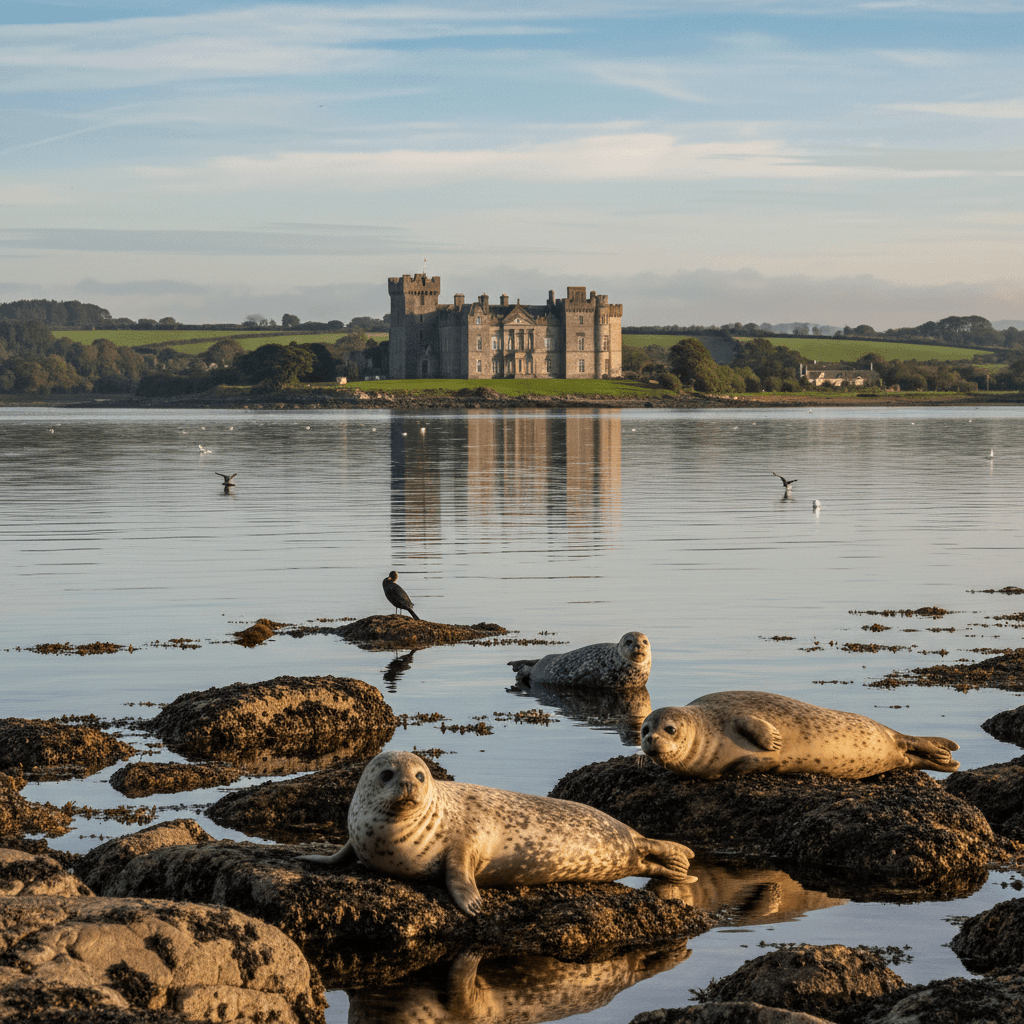
- Combine with Strangford Lough - The eastern section overlaps
For Reflection
Whether you approach this route as a pilgrim, a historian, or simply a curious traveler, the landscape provides a tangible connection to 1,500 years of faith and culture. Patrick's story transformed Ireland; these places preserve his memory.
Before You Drive This Route
At 191km the St Patrick's Trail looks like a 3.5 hours drive on paper. Allow 2 days and you will actually see it. The Irish driving rules and road signs guide covers speed limits, signage and the penalty points system, which is worth ten minutes before you set off. This one is entirely in Northern Ireland, so there are no tolls and distances are signed in miles rather than kilometres; the Irish toll roads guide covers the border crossing if you are driving up from the Republic. Most visitors hire at the airport; our guide to renting a car in Ireland covers deposits, excess and what to check before you drive off the lot. More drives in the same corner of the country are on the County Down page, and the Mourne Coastal Route pairs naturally with this one.
Frequently asked questions
Tap a question to expand the answer.
QHow long does the St Patrick's Trail take to drive?▼
QCan you drive the St Patrick's Trail in one day?▼
QWhich direction is best to drive the St Patrick's Trail?▼
QIs the St Patrick's Trail suitable for nervous drivers or large vehicles?▼
Need a Car? Try GoCar
Flexible car sharing across Ireland. Get €25 off your first trip.
Register with GoCarCompare car rental options →Hiring instead? You're liable for the first €1,500–€3,000 of damage. Read up on car hire excess insurance before you book.
More routes you'll love
Hand-picked drives with a similar vibe.