Royal Meath & Hill of Tara
Meath
Royal Meath & Hill of Tara at a glance
- Distance
- 121 km
- Driving time
- 2.5 hoursAllow 1 day
- Best direction
- Dublin → Slane
- Best season
- Spring, Summer and Autumn
- Nearest airport
- Dublin~28 km away
- Fuel estimate
- ~€147.9 L at €1.75/L
Fuel estimate assumes 6.5 L/100km and an average Republic of Ireland petrol pump price of €1.75 per litre (AA Ireland, July 2026) — see the Ireland fuel price guide for current rates.
About This Route
Meath was once the fifth province of Ireland - the sacred royal centre from which High Kings ruled. This route explores the Hill of Tara and the ancient landscape that made Meath the spiritual heart of Celtic Ireland.
Why This Route?
Royal Meath speaks to Ireland's pre-Christian soul:
- Hill of Tara - Seat of 142 High Kings
- Spiritual landscape - Sacred sites aligned across the land
- Ancient assembly - Where kings were crowned and laws proclaimed
- Mythological - Every hill has legends attached
- Accessible mystery - Visible remains and invisible power
Where to Stay
This 121km route runs northwest from Dublin through the Hill of Tara, Trim Castle, and Bective Abbey before reaching Kells and Slane. While you could day-trip from Dublin, basing yourself in Trim places you at the geographic heart of Royal Meath and avoids the commute back to the capital each evening.
Trim
Trim's accommodation scene has grown steadily, with heritage hotels, riverside guesthouses, and B&Bs all within walking distance of Ireland's largest Norman castle. The Hill of Tara is barely 20 minutes east, Bective Abbey is five minutes north, and Kells is a short drive further on. After a full day of ancient sites you can walk along the Boyne from your hotel to Trim Castle, floodlit after dark.
The Hill of Tara
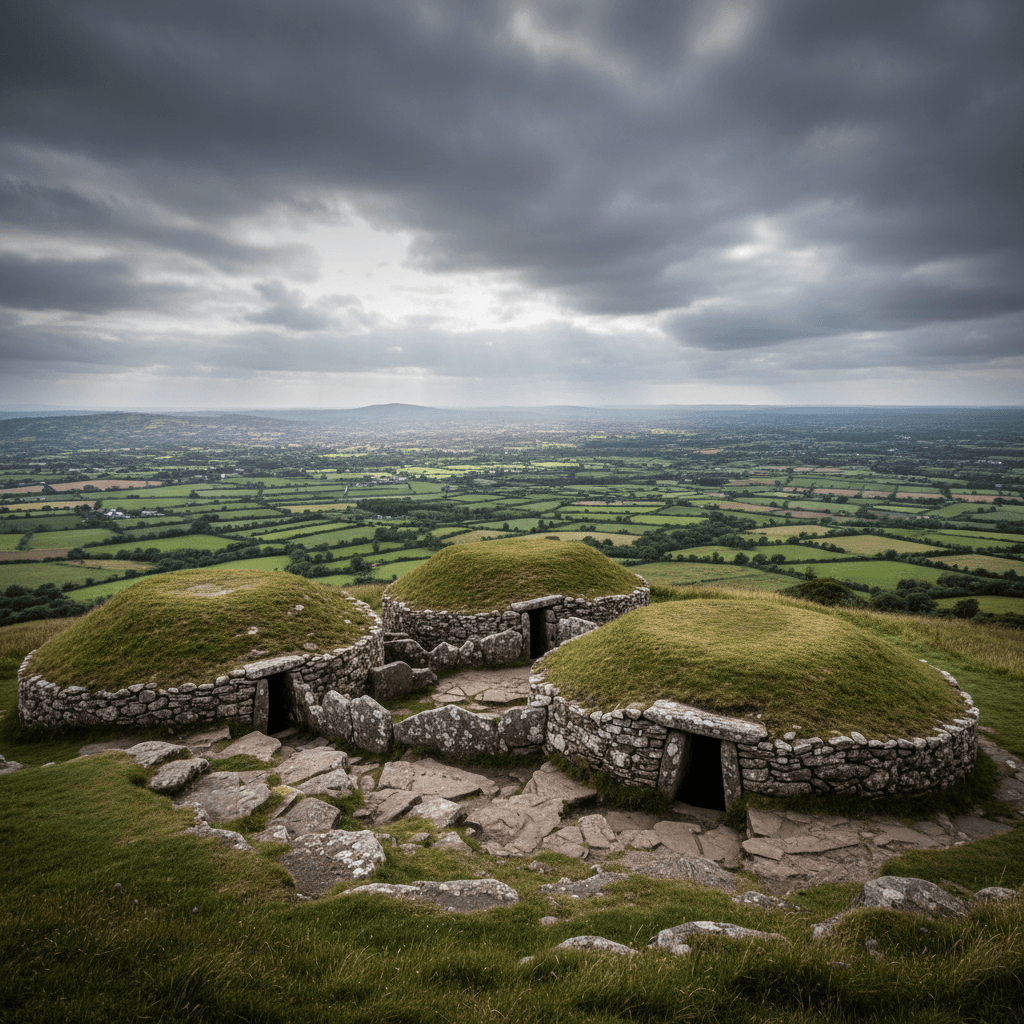
Tara (Teamhair) was the inauguration place of the High Kings of Ireland for over 2,000 years. Though the visible remains are subtle (grass-covered earthworks), the site's importance cannot be overstated.
What You'll See
- Rath of the Synods - Earthwork where St Patrick confronted the druids
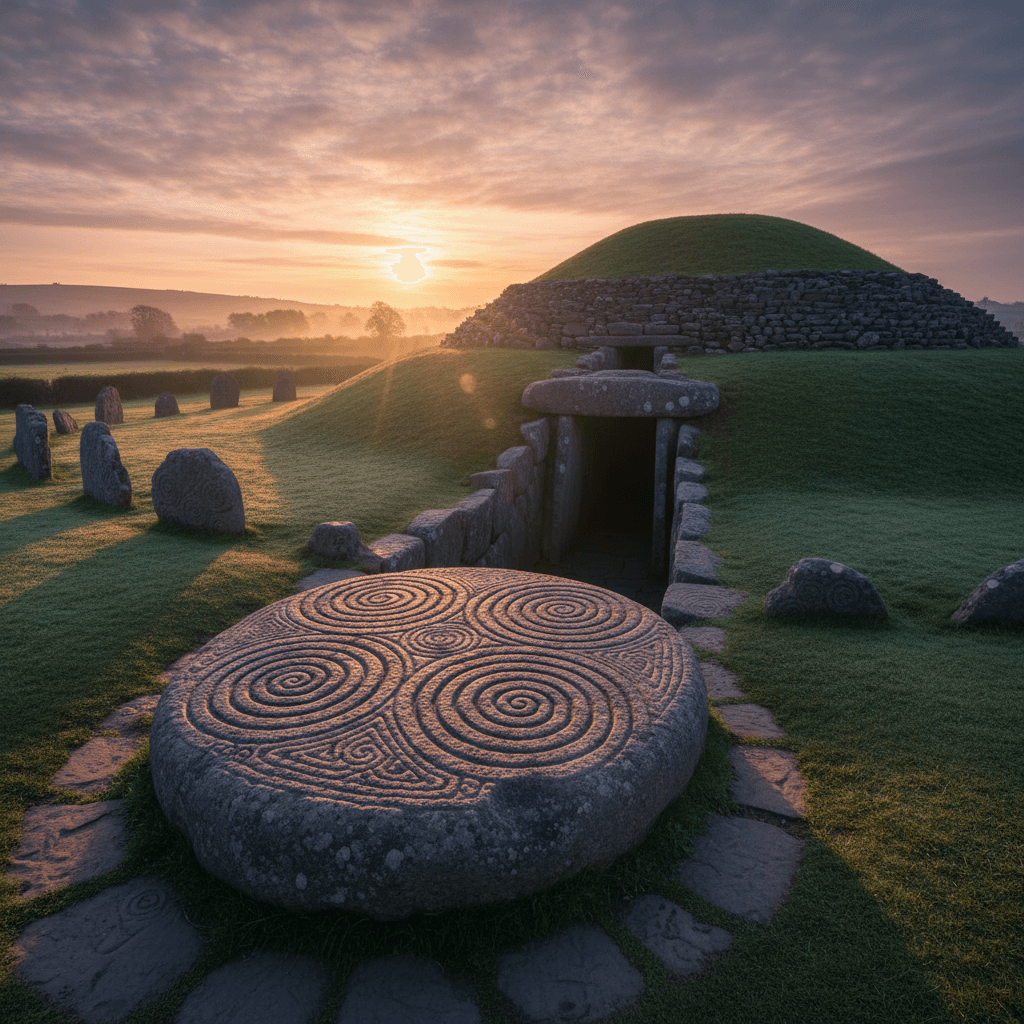
- Mound of the Hostages - 4,500-year-old passage tomb
- Rath na Rí - The Fort of the Kings, central enclosure
- Stone of Destiny - The Lia Fáil, said to cry out for the true king
- Banqueting Hall - Processional avenue (not actually a hall)
Visitor Centre
The church houses an excellent audio-visual presentation explaining Tara's significance.
The Route
Starting from Dublin
Take the N3 northwest toward Navan, turning off at Dunshaughlin.
Dunshaughlin
An ancient church site, though the modern town has little of historic interest.
Tara
Allow at least 1.5-2 hours for the hill and visitor centre. Walk the full site for the best understanding.
Skryne (Achall)
A village with a medieval church and tower. Legend says Queen Maeve is buried in the nearby mound.
Hill of Slane
Where St Patrick lit the paschal fire in 433 AD, challenging the High King at Tara. The hill offers excellent views and atmospheric ruins.
Navan
The county town, at the confluence of the Boyne and Blackwater rivers. The town has good facilities but limited historic interest.
Kells
A monastic town of major importance:
Kells Monastery
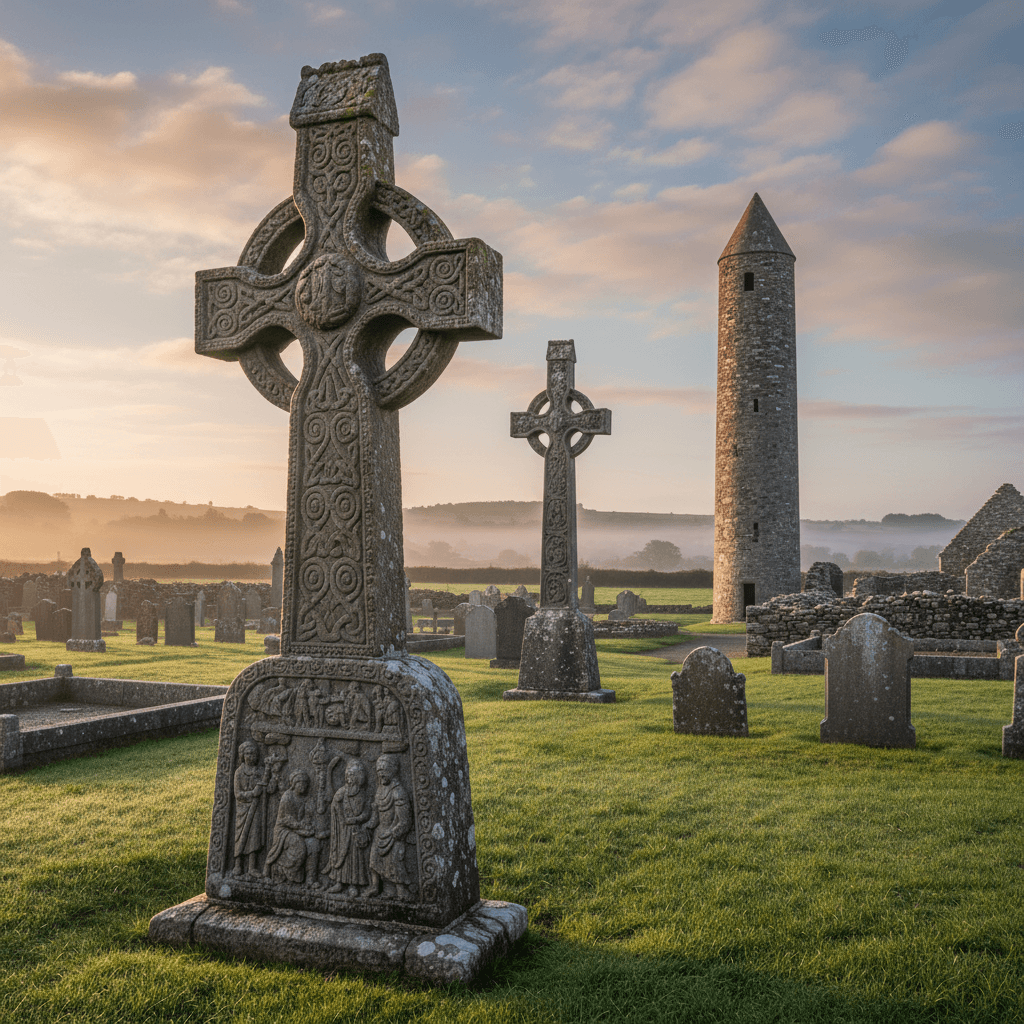
Famous for the Book of Kells (now in Trinity College Dublin), the monastery preserves:
- Round tower
- High crosses (5 survive)
- St Columba's House (9th-century stone-roofed oratory)
Market Cross
An unusual cross in the town square.
Loughcrew (Optional Extension)
The Slieve na Calliagh hills host a remarkable passage tomb cemetery - see Hidden Meath route.
The High Kings
Over 142 High Kings were inaugurated at Tara, including legendary figures:
- Conn of the Hundred Battles
- Cormac Mac Airt - The Solomon of Ireland
- Niall of the Nine Hostages - Ancestor of the O'Neills
- Lóegaire - Who confronted St Patrick
The last High King to use Tara was Máel Sechnaill II (died 1022).
Mythology
The Lia Fáil
The Stone of Destiny would shriek when the rightful king touched it. Some believe this stone was taken to Scotland (the Stone of Scone), while others say it remains at Tara.
The Feast of Tara
Every three years, a great assembly (feis) was held at Tara to proclaim laws, settle disputes, and celebrate. The gathering could last weeks.
Walking
Tara Loop
- Distance: 3km
- Time: 1-1.5 hours
- Difficulty: Easy
- Highlights: All major monuments
Hill of Slane
- Distance: 1km
- Time: 30 minutes
- Difficulty: Easy
- Highlights: Ruins, views to Tara
Practical Tips
- Tara is exposed - Bring layers for wind and rain
- Interpretation panels - Read them to understand the landscape
- Quiet visit - Go early or late for atmosphere
- Kells is a working town - Monuments scattered through streets
- Combine with Boyne Valley - They complement each other
Before You Drive This Route
At 121km the Royal Meath & Hill of Tara looks like a 2.5 hours drive on paper. Allow 1 day and you will actually see it. The Irish driving rules and road signs guide covers speed limits, signage and the penalty points system, which is worth ten minutes before you set off. For what a trip like this costs in 2026, from fuel to beds, see the budget guide. Most visitors hire at the airport; our guide to renting a car in Ireland covers deposits, excess and what to check before you drive off the lot. More drives in the same corner of the country are on the County Meath page, and the Boyne Valley UNESCO Trail pairs naturally with this one.
Frequently asked questions
Tap a question to expand the answer.
QHow long does the Royal Meath & Hill of Tara take to drive?▼
QCan you drive the Royal Meath & Hill of Tara in one day?▼
QWhich direction is best to drive the Royal Meath & Hill of Tara?▼
QIs the Royal Meath & Hill of Tara suitable for nervous drivers or large vehicles?▼
Need a Car? Try GoCar
Flexible car sharing across Ireland. Get €25 off your first trip.
Register with GoCarCompare car rental options →Hiring instead? You're liable for the first €1,500–€3,000 of damage. Read up on car hire excess insurance before you book.
Fuel stops on this route
Towns on the route with filling stations. Rural stations often close early, so top up before a long empty stretch.
- Dublin
- Dunshaughlin
More routes you'll love
Hand-picked drives with a similar vibe.